Make EV Number Plates Work With Tech, Not Against It
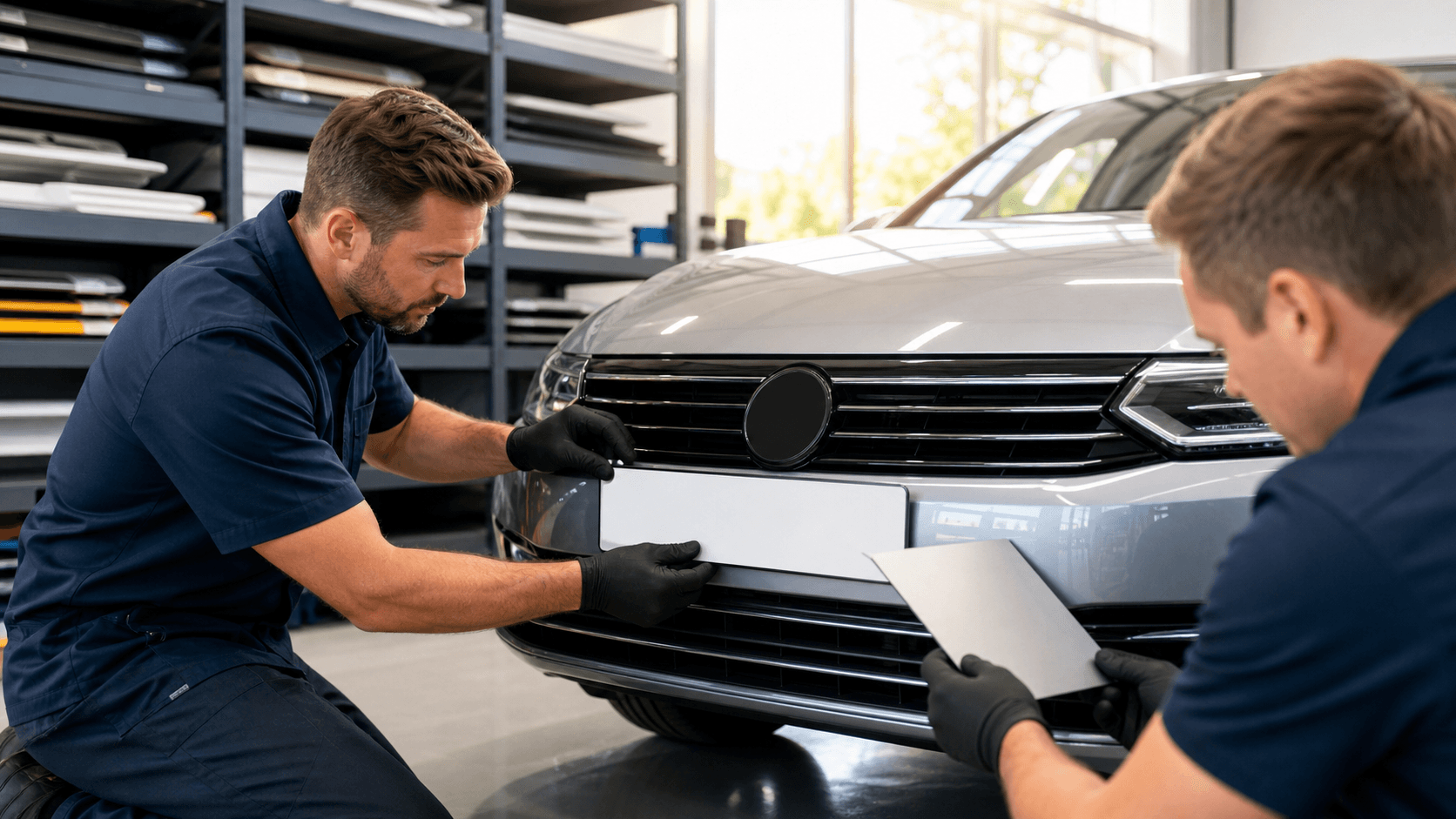
Fitting standard car number plates on an EV is not always as simple as lining them up and sticking them on. Flush bumpers, hidden sensors and smooth bodywork all change how and where a plate can sit. If it is in the wrong place, you can upset the car's tech, hurt airflow and even run into legal trouble.
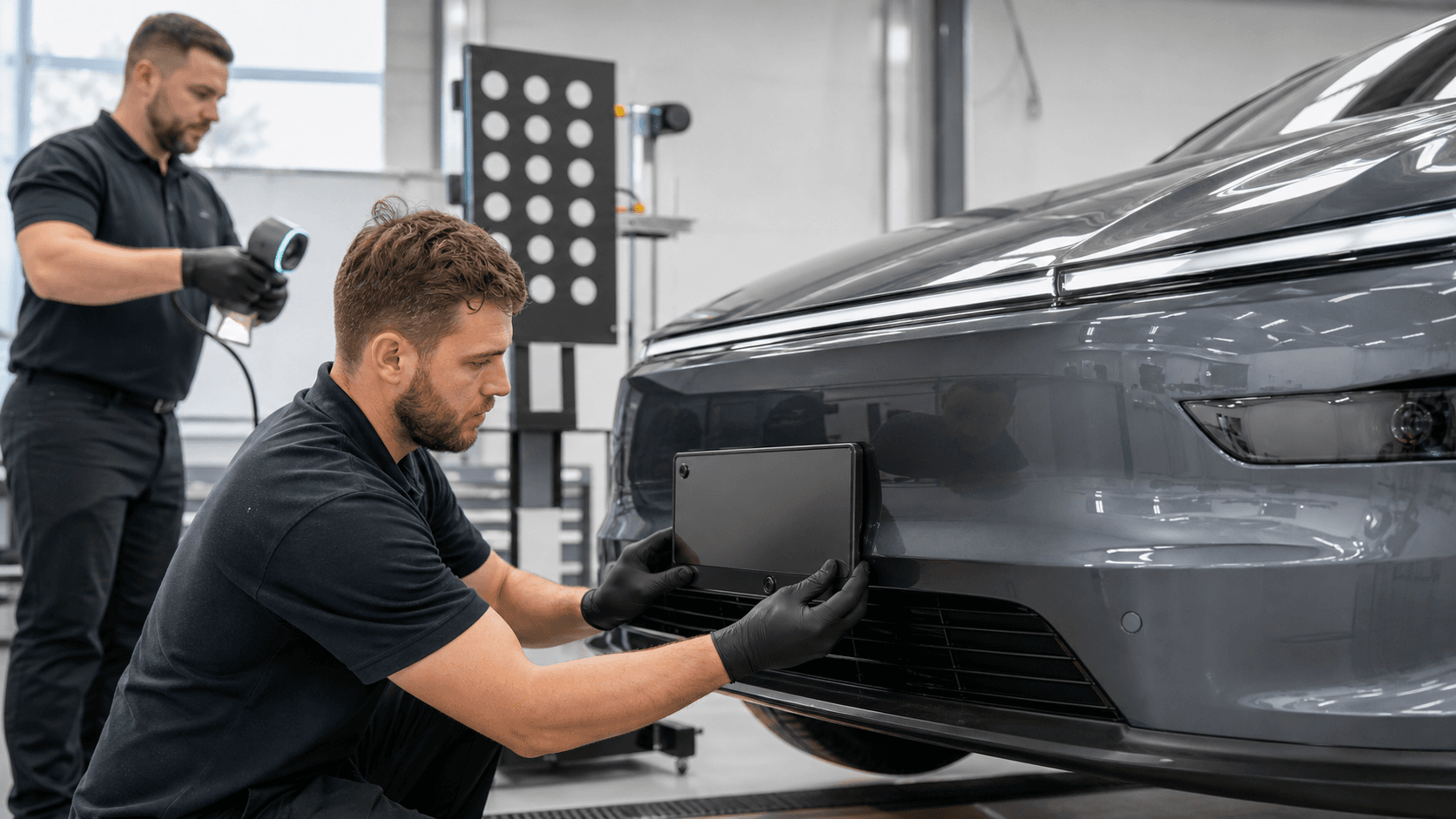
Modern EVs often have radar behind the badge, cameras around the grille area and a bumper full of ultrasonic sensors. A chunky plate or a deep bracket can sit right in the middle of all that. That can mean parking beeps that never stop, cruise control that cuts out or airflow that makes range a little worse on long drives.
There is also the legal side. Plates must be clear, readable and in the right place, and at the right angle. Get that wrong and you risk MOT problems or being stopped on the road. This guide walks through how to fit plates to an EV in a way that keeps the tech happy, keeps you legal and still looks smart and tidy.
Legal Plate Positioning on Modern EV Front Ends
Standard car number plates on road cars have to meet clear rules in the UK. Front and rear plates must be:
- Easy to read from the front and rear
- Fixed close to vertical, not laid back or hidden under a lip
- Fitted at a sensible height from the road so they are visible
- Made with the correct font, spacing, reflective face and plain background
That is where legal plates differ from show plates. Show plates can play around with layout, tints or styles for events or private land. On the road, you need the correct font and layout, no tinted or ghost style background and no shapes or characters that make the registration harder to read.
EV front ends can make this tricky. Many have:
- Smooth, closed grilles with little space in the centre
- Radars behind a flat badge area
- Slim lower air inlets for cooling batteries and motors
If you stick a plate too low, it can block cooling airflow. Too high and it might sit in front of a camera or radar. Angling it back heavily for aero is also not allowed, and placing it inside the windscreen in place of a front plate is not acceptable either.
Offset plates can sometimes work, but you must not cover lights or sensors. Number plates that are too small are another issue. Car registrations must use plates of the correct size, not the smaller formats meant for motorbikes or imports. Staying within those rules helps you avoid MOT issues and lets your EV keep its cooling and lights working as intended on long motorway runs.
Adhesive Mounts vs Brackets on Flush EV Bumpers
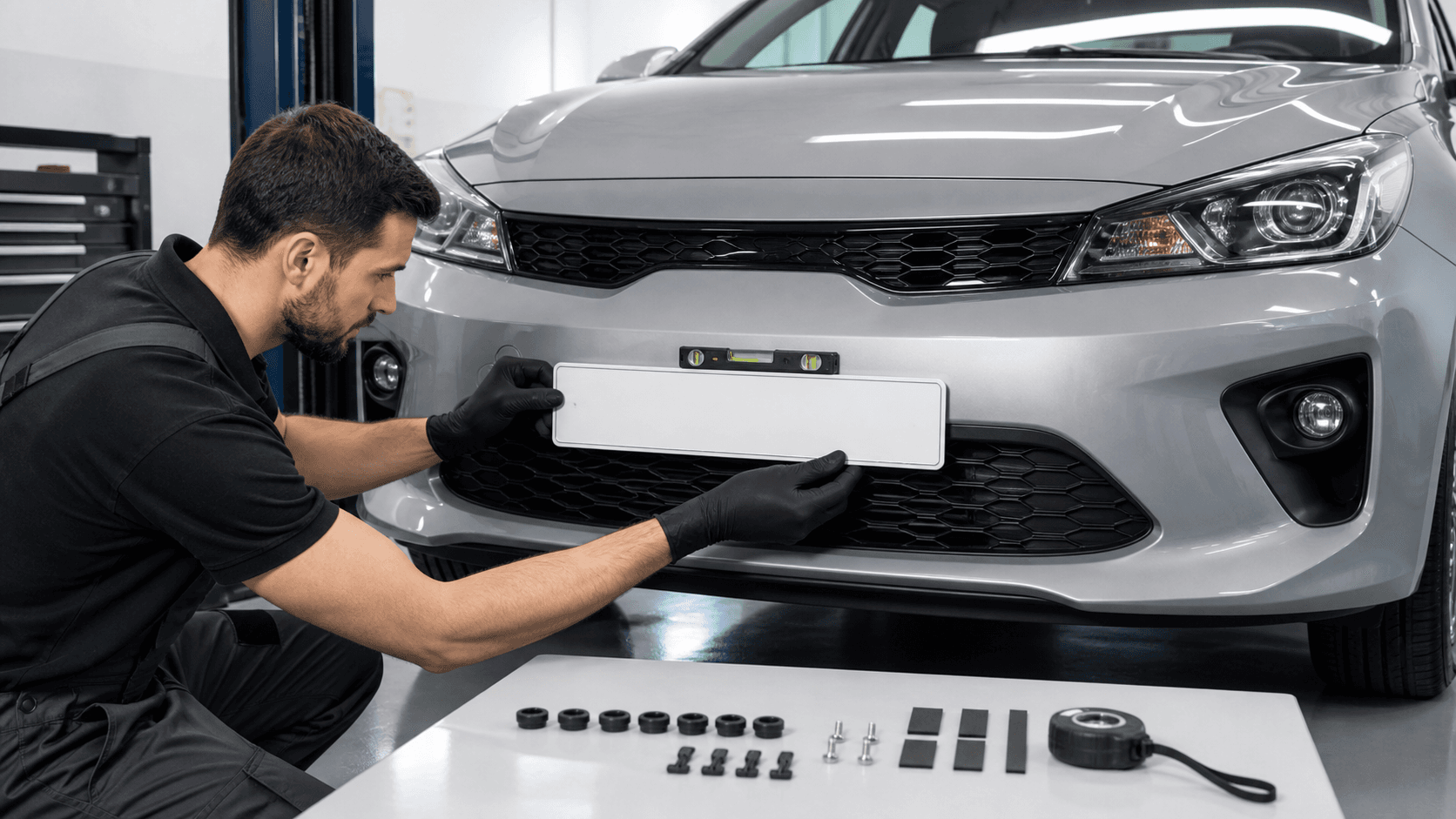
Flush plastic bumpers on EVs often have no grille bars or solid frame to screw into. That leaves two main choices for mounting: strong adhesive tape or plate brackets.
High-bond automotive adhesive has some clear benefits:
- No drilling into paint or plastic
- A very low profile that can help airflow
- Ability to follow gentle bumper curves
- A clean, modern look without visible hardware
The key is quality. Premium tapes designed for automotive work hold up better under heat, UV and road spray than cheap options. That matters in summer when panels get hot in the sun and stop-start traffic. Good adhesive can cope with the expansion and contraction of plastic bumpers without lifting at the corners.
Brackets and frames still have a place, especially on cars with lots of sensors. They can:
- Hold the plate a predictable distance away from radar or ultrasonic sensors
- Level a plate on complex bumper shapes
- Make removal and replacement more controlled if the plate ever needs changing
Low-profile brackets can be chosen to sit within the car's sensor map, avoiding cones of radar and ultrasonic energy. When plates are supplied pre-drilled to suit these brackets, fitting becomes more straightforward. Correct surface prep, time for adhesive to cure and careful removal when needed all help protect modern EV paint and trim.
Avoiding ADAS and Radar Interference with Your Plate
Many EVs pack a lot of driver assistance into the front bumper area. Common locations include:
- Radar modules behind the front badge or central panel
- Ultrasonic parking sensors along the bumper line
- Forward-facing cameras near the grille or in the badge zone
- Extra sensors for lane and traffic systems around the front end
A number plate that is too thick, too tall or mounted on a deep bracket can block or reflect these signals. Radar can bounce off a chunky edge or a thick 4D-style build if it sits directly in the beam. Ultrasonics can echo around the back of the plate, giving false beeps when you park. Even a small change in angle can affect a camera's view of the road.
Some simple positioning strategies help a lot:
- Keep plates clear of the main badge radar zone wherever possible
- Avoid placing brackets right in front of corner parking sensors
- Keep the plate plane consistent, not twisted or bowed
- Use offsets that still meet legal visibility rules if the centre is full of sensors
Plate material and thickness also matter. Performance-focused designs, like 3D and 4D plates, look sharp, but they need the right mounting so the extra depth does not sit in the way of beams or sight lines. Matching plate design with an EV-friendly mount helps keep adaptive cruise, emergency braking and park assist features working as they should.
Aero-Friendly Plate Choices for Range and Style
Smooth front ends are a big part of why many EVs feel calm and quiet at speed. A badly positioned plate can spoil that. When air hits a plate that sticks out or sits in a weird spot, it can create extra drag and noise, and in some cases a small hit to range over long distances.
There are choices that help airflow while still looking good:
- Low-profile adhesive mounting instead of thick bracket stacks
- Plate shapes that suit the car's bumper lines, such as hex plates where styling allows
- Slim formats for the rear or for show use, where the law does not apply
- Neat edge finishing to stop air catching rough or lifted edges
It is important to separate legal road plates from show plates. Road-legal plates must meet the standard rules. Show plates can push styling further for meets, photo shoots or events on private land. Swapping between the two at the right time lets you keep both style and compliance, without risking fines or MOT problems.
Thoughtful plate choice and mounting can keep the front of the car flowing cleanly through the air. For EV owners who care about aero, it is one more small detail to get right alongside tyre choice and driving style.
Upgrade Your EV Plate Setup with Confidence
It is worth taking a slow walk around your EV and looking closely at how both plates are mounted. Ask yourself:
- Are the plates straight, secure and clearly visible at a sensible height?
- Is anything touching or sitting directly in front of sensors or the front badge area?
- Do you hear odd parking beeps, or see warnings when using driver aids?
- Are the edges of the plate or tape starting to lift from heat or age?
If anything feels off, a considered update can improve both how the car looks and how the tech behaves. Matching legal standard car number plates with the right adhesive or bracket solution for your specific model keeps you on the right side of the rules, protects sensitive sensors and helps the aero do its job.
By choosing plates and mounts that suit modern EVs, and fitting them properly, you can drive with more peace of mind, enjoy the styling you want and let the car's assistance systems work as the maker intended.
Upgrade Your Vehicle With Premium Plates Today
Choose South West Number Plates for durable, road-legal standard car number plates that are made to fit your vehicle perfectly. We produce high quality plates quickly, so you can get back on the road with minimal hassle. If you have any questions or need help with your order, simply contact us and our friendly team will guide you through the options.