Ride Safer and Smarter with the Right Plate Setup
Motorcycle number plates are small, but they carry a lot of responsibility. They keep you legal, help cameras and officers identify your bike, and can even affect how safe and visible you are on the road. When they are badly placed or badly mounted, they can cause real problems.
In late summer and through the rest of the year, many riders are out for longer trips, bike meets, and commuting on busy, camera-enforced routes. That means more attention on motorcycle number plates, from MOT testers to roadside checks and ANPR cameras. A wonky, hidden or shaky plate can lead to fines, a failed test, or worst of all, the plate snapping off on a rough UK road.
We create bespoke motorcycle number plates here at South West Number Plates in Bristol, and we see all sorts of setups. In this guide we are sharing clear, practical tips so you can choose, mount and maintain your plate in a way that keeps you legal, visible and confident every time you ride.
Understanding UK Laws on Motorcycle Number Plates
Before you pick a style or bracket, you need to know what the law expects. UK motorcycle number plates must follow specific rules so they are easy to read for people and for cameras.
Key legal basics include:
- The correct character size for motorcycles
- The standard Charles Wright font only
- Proper spacing, with no squeezed or stretched characters
- A reflective yellow background with black letters and numbers
- No altered fonts, no extra patterns, and nothing that obscures the characters
If the plate is hard to read at a glance, it is likely to be a problem. That includes tinted covers, dark bolt caps over characters, extra stickers around the edge, or anything else that makes the plate look busy or unclear.
Placement is just as important as the plate itself. The plate must:
- Be mounted at the rear of the bike
- Sit vertical or close to vertical
- Be clearly visible from behind at a reasonable distance
- Not be tucked under the tail so that you can only see it from low down
- Not be so high, small or angled that it disappears from normal view
When plates do not follow these rules, you can face MOT failure, a prohibition notice, or on-the-spot penalties. ANPR cameras on busy summer routes and around cities rely on clean, clear plates. If the system cannot read your plate because it is too small, hidden, bent or dirty, that can trigger extra attention you do not want.
Optimising Visibility for Day and Night Riding
Good visibility is not just about ticking a legal box. It helps others see and identify you quickly, especially in heavy traffic, rain or low light. A well-placed motorcycle number plate makes you easier to spot, which is better for everyone.
Aim for a position where the plate has an unobstructed view from straight behind and slightly off to each side. Watch out for:
- Tail tidies that swing the plate too far under the tail
- Mudguards, indicators or racks that cover the corners of the plate
- Soft luggage or top boxes that hang down and block part of the plate
Lighting matters as well. Your rear plate light must:
- Work consistently, with no flicker
- Be white only, not blue or any other colour
- Shine clearly on the whole plate
- Not be covered by dark plastic or tinted accessories
Reflective, high-contrast plates really help once the sun drops or the weather turns. Clean acrylic with a quality reflective layer pops under headlights and street lighting, which is especially helpful on unlit country roads. When you choose shorter motorcycle plates or different shapes, you still need the full registration to be clearly visible and well lit.
At South West Number Plates we focus on finish and reflectivity on our road-legal plates, so even our premium 3D and 4D options stay crisp and readable in all sorts of conditions, as long as they are mounted correctly.
Vibration-Resistant Mounting That Survives Every Ride
Motorcycles shake and flex far more than cars. Engine vibration, potholes, speed bumps, hard acceleration and track-style riding can all stress your number plate. Poorly mounted plates can crack, bend, work loose or even shear off.
To keep your plate secure, think about the whole setup, not just the plate:
- Use a solid, appropriately sized bracket that does not flap about
- Avoid very flimsy tail-tidy kits that move or flex at speed
- Choose fixings that match the plate material and your bike's mounting points
- Make sure the bracket and plate are not acting like a lever on a thin bit of plastic
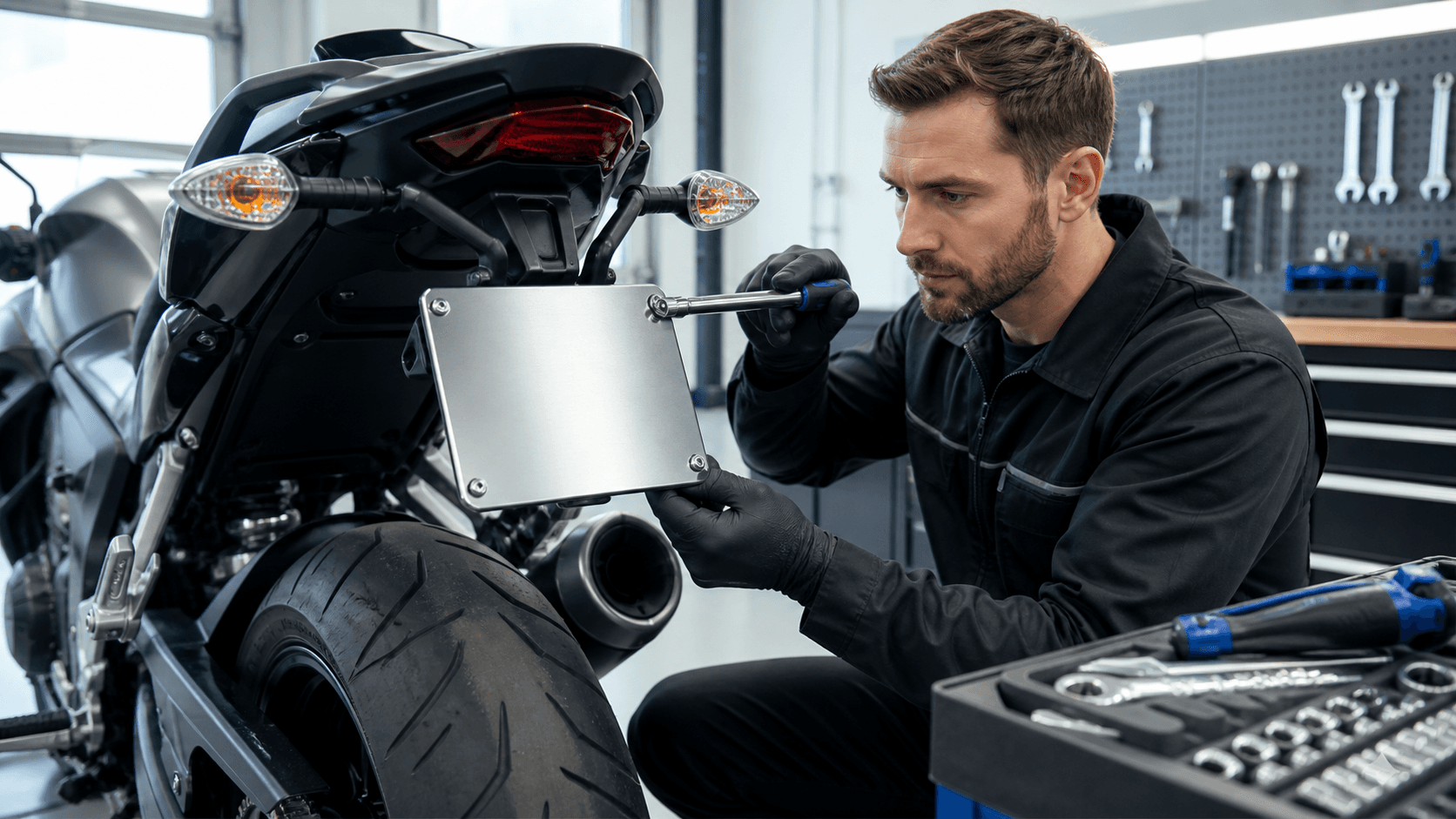
Bolts are usually more secure than sticky pads on a motorcycle, especially with premium 3D and 4D acrylic plates. If you do use adhesive pads, they must be high-quality, fitted to a clean, flat surface and checked often.
For 3D and 4D plates, we suggest:
- Using proper plate bolts with washers to spread the load
- Adding anti-vibration washers so the plate is less likely to crack
- Tightening bolts firmly but not to the point where they distort or stress the acrylic
- Checking bolt tightness as part of your regular bike checks
This kind of setup helps your plate survive bumpy lanes and daily commuting without rattling itself to pieces.
Staying MOT and ANPR Friendly with Custom Plates
Many riders want a plate that suits the style of their bike. Short plates, neat rear ends and 3D or 4D lettering can all look great. The trick is to balance that style with legality so your bike still sails through MOT and works with ANPR.
For MOT, testers are looking for:
- Clear, legible characters in the correct size and font
- Legal spacing with no compressing or stretching
- Borders and flags that follow current rules
- No folding, trimming or cutting into characters
- A tilt or angle that still keeps the plate easy to read from normal standing height
ANPR systems read plates by looking for clear, consistent characters and strong contrast. Issues often appear when a plate is:
- Heavily angled up or tucked far under the tail
- Mirrored or seen through a strongly tinted cover
- Distorted by curves, bends or folds
- Covered in dirt, spray, salt or road grime
A compliant but customised plate can still look smart and stand out, as long as it keeps the legal layout and stays easy to scan. That is where road-legal 3D and 4D motorcycle plates from South West Number Plates work well: they add depth and style but keep the characters and spacing within the rules.
Choosing and Fitting the Right Plate for Your Bike
Different bikes suit different plate styles, but the same basic rules apply. Think about how the back of your bike is shaped and how it will carry the plate.
General guidance for common bike types:
- Sportbikes: A shorter, legal-height plate on a sturdy tail tidy can work well, as long as it is not pulled too far under the seat.
- Adventure bikes: A standard plate with a strong bracket is usually best, so it can cope with luggage and rough roads.
- Commuters: A simple, full-size plate is often easiest for durability and visibility in traffic.
- Cruisers: Plates often sit lower and further back, so check they are not hitting the tyre or suspension on full travel.
- Imports: Make sure any non-UK rear mounts still allow a legal UK-sized plate to sit in a clear, visible position.
Before big rides and before MOT time, it helps to run through a quick check:
- Are all fixings tight, with no cracks in the plate or bracket?
- Is the plate clean and free from heavy dirt or spray?
- Does the plate light work properly in the dark?
- Can you clearly see the whole plate from behind at a normal standing height?
- Does the registration match your V5C and is the font and spacing correct?
At South West Number Plates we create a wide range of motorcycle number plates, including premium 3D and 4D styles, performance-focused options and different shapes like short or hex plates, along with accessories and fitting options here in Bristol. With the right combination of legal layout, smart placement and solid mounting, your bike can look great, stay compliant and keep its plate firmly in place on every ride.
Upgrade Your Ride With Premium Plates Today
At South West Number Plates, we make it simple to order road-legal, great-looking motorcycle number plates that suit your bike and meet UK regulations. We handle the details so you can focus on enjoying the road, with plates crafted for durability and clarity. If you have any questions about sizes, fitting or legal requirements, just contact us and we will help you choose the right option.