Stop Worrying About Wobbly Plates
A loose number plate is one of those small problems that never quite goes away. It starts with a faint rattle, then the plate starts to sit at an angle, and before long you are wondering if it will part company with the car or bike altogether. That is annoying enough on a daily driver, but if it flies off at speed you could be looking at a fine, MOT trouble or losing a cherished registration.
At South West Number Plates, we see this all the time with both cars and motorcycles. The plate itself is usually fine. It is the fixing that fails. In this article, we will look at why plates keep coming loose, why standard fittings do not always cope with real-world use, and how magnetic number plate accessories can give you a cleaner, more secure solution that actually lasts.
We will focus on our Magnetic Number Plate Kit (Single) and Magnetic Number Plate Kit (Set), explain how they work, how to fit them properly, and when it makes sense to refresh tired plates at the same time. If your search history is full of things like "replacement plates", this is for you.
Why Your Plate Keeps Coming Loose in the First Place
Most plates in the UK are fitted with either double-sided sticky pads, a few generic screws or a clip-in plastic holder. All of those methods work at first, but they are often let down by weak adhesion, poor surface prep or low-quality hardware. Add vibration, flex in the bumper or fairing and constant heat and cold cycles and something eventually gives.
Common issues include:
- Sticky pads applied to a dirty or waxed surface
- Self-tapping screws that crack the acrylic or chew into soft plastic
- Plastic frames that go brittle and snap at one corner
- Mix-and-match fixings that never hold the plate fully flat
Real life is tougher on plates than many people think. Hard road use, track days, bumpy lanes, frequent washing and pressure washers all put pressure on the fixing points. Enthusiasts who regularly remove plates for detailing, photography or shows put even more stress on basic pads and holders, because they are constantly being peeled off or unclipped.
When a plate finally lets go, the default reaction is often to search for "replacement plates", buy another one, bolt or stick it on and hope for the best. Without addressing why the mounting failed in the first place, the new plate is likely to go the same way.
The Drawbacks of Traditional Fixings vs Magnetic Holders
Screws, pads and plastic frames all do a job, but each has its trade-offs. Screws can crack the acrylic around the holes, or mark bumpers and fairings if they are over-tightened or rust over time. Sticky pads can peel at the corners, especially on curved surfaces, and they often leave a mess when you remove them. Plastic holders can look bulky, can rattle, and once one tab breaks you end up with a plate that flaps about.
Magnetic mounting solves a lot of these headaches by taking the stress away from a few small points and spreading it across the whole plate. High-strength magnets give solid, repeatable alignment with no drilling through the face of the plate. That is a big advantage if you are particular about how your car or bike looks, or if you want the cleanest possible finish on a performance build.
Good number plate accessories should protect the vehicle as well as hold the plate. Magnetic holders sit neatly behind the plate, so there are no exposed fixings on the bumper or fairing. That helps preserve paintwork and suits cars and bikes where a visible screw or bulky frame would spoil the front or rear end.
How South West Magnetic Number Plate Kits Work
We offer two main options: the Magnetic Number Plate Kit (Single), for fitting one plate, and the Magnetic Number Plate Kit (Set), designed for front and rear plates together. Both are intended for use with UK-legal plates supplied by us, whether that is a standard road plate, a performance style or a replacement for an old, tired plate.
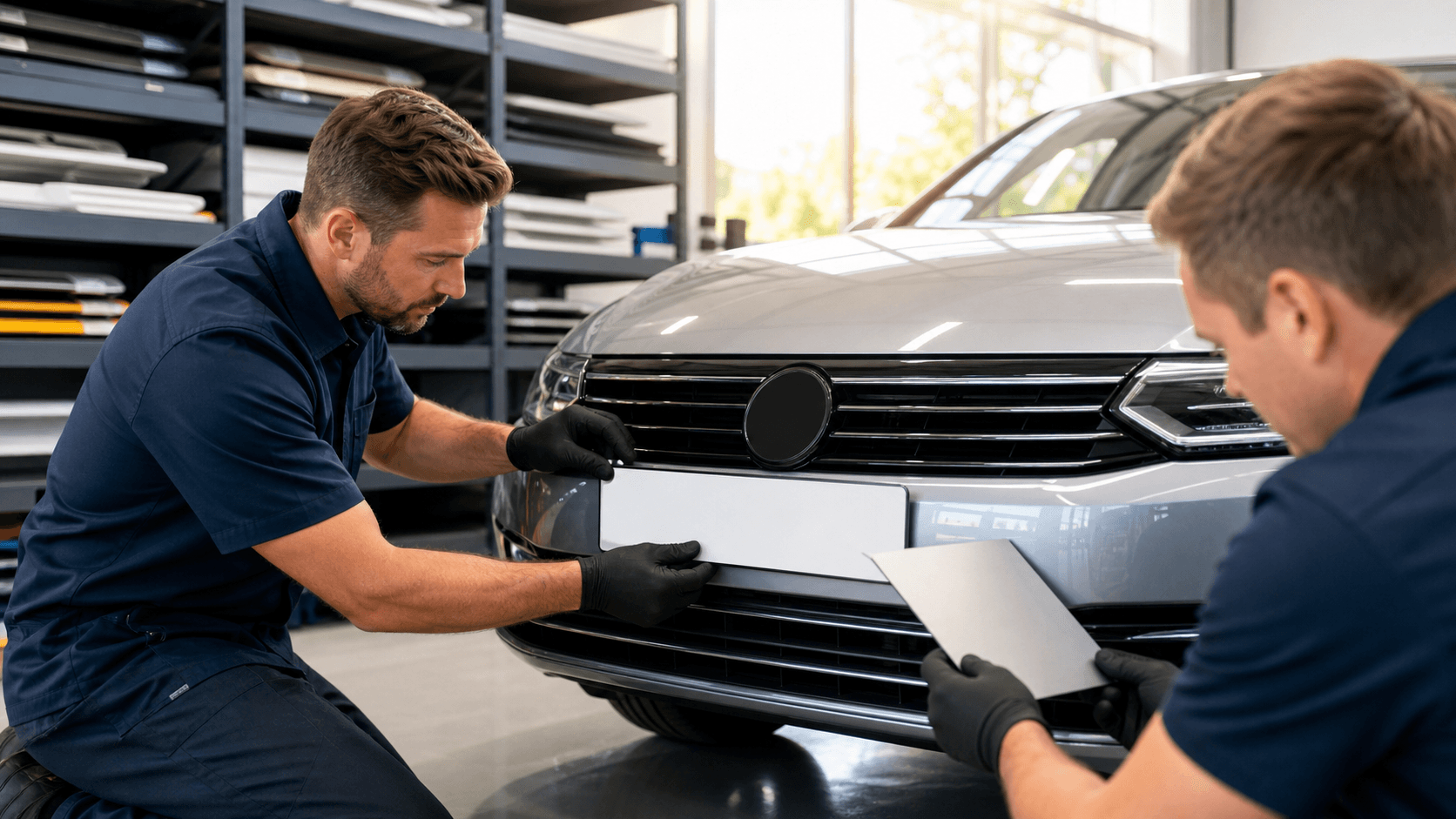
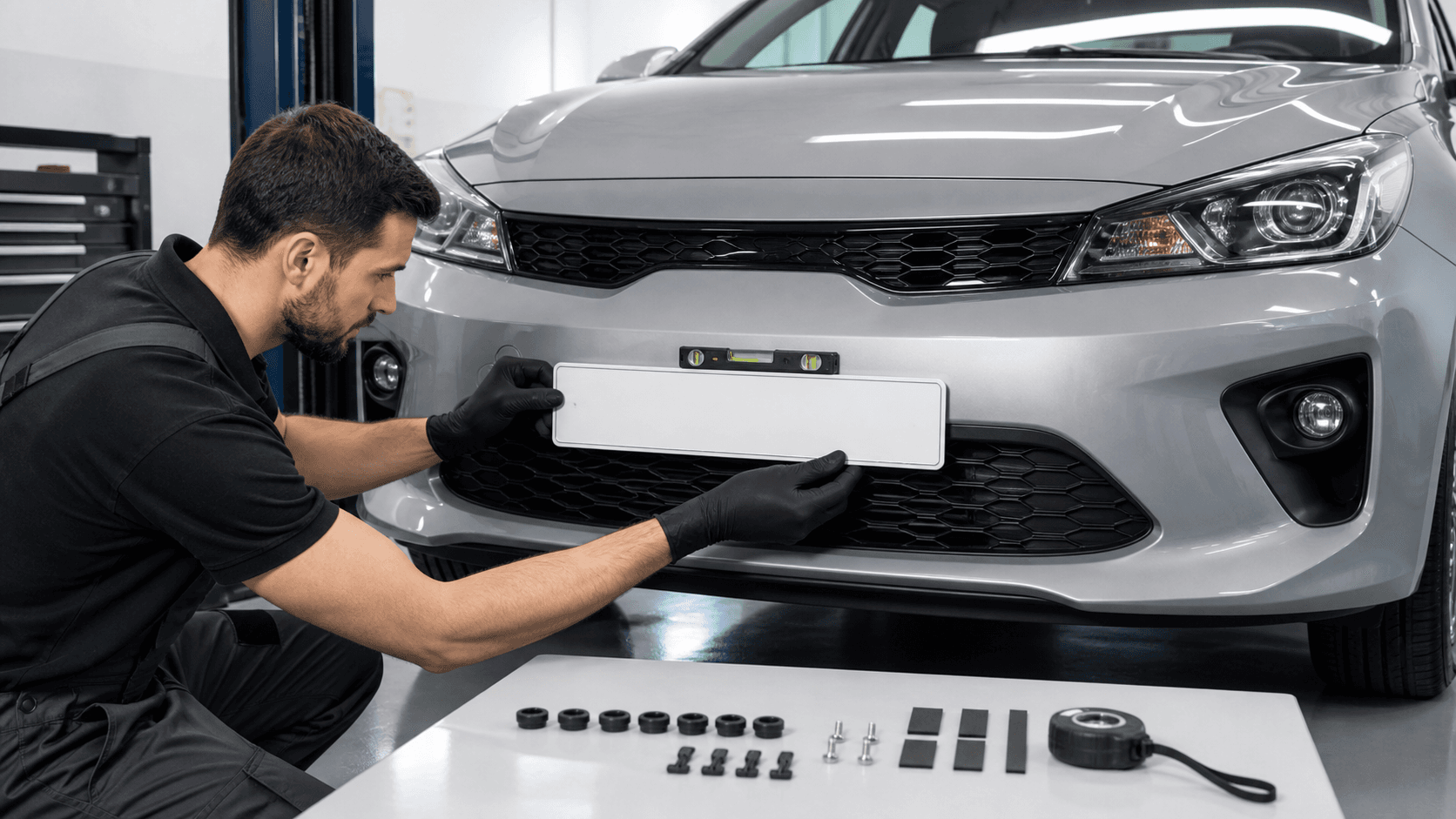
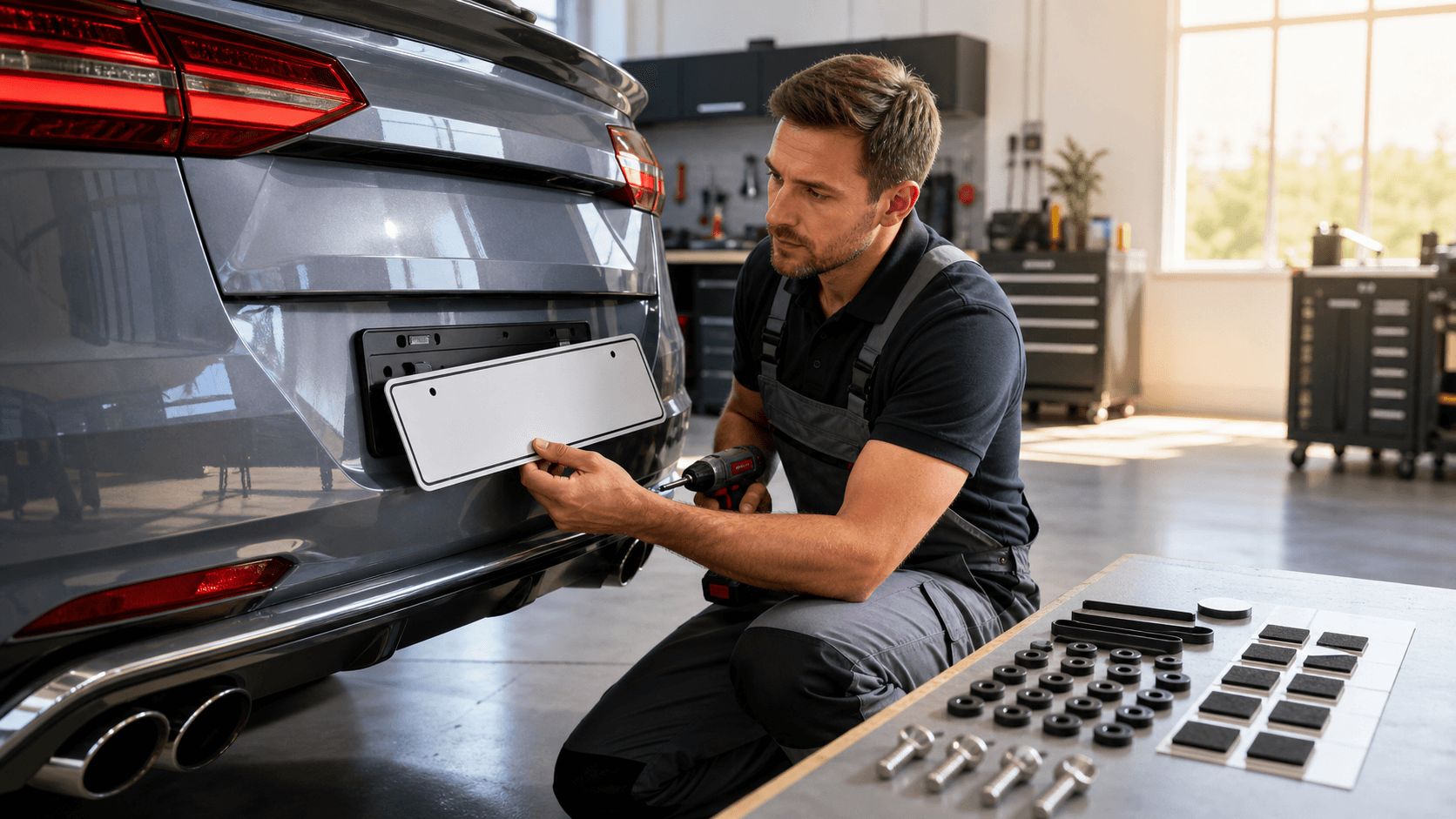
Each kit is based on powerful permanent magnets and matching metal strips. The magnets are bonded securely to the vehicle in the area where the plate will sit. The metal strips or plates are then fixed to the back of your number plate, so once everything is aligned, the plate snaps into place and sits flush against the car or bike.
Because the holding power is spread across multiple magnets, the plate stays put at motorway speeds while still being easy to remove when you need to. That makes these kits very handy for daily drivers that see regular washing, and also for performance cars and bikes that attend track days, shows or photography sessions where running temporarily without plates is allowed off the public road.
Step-by-Step: Fitting a Magnetic Number Plate Kit Properly
A magnetic kit is only as good as the fitting, so it pays to take a little care when you install it. The basic process is straightforward and does not require special tools for most vehicles.
Start with preparation:
- Clean and degrease the area where the magnets will mount
- Make sure the surface is as flat as possible and free from wax or polish
- Dry-fit the plate to check alignment and height before you commit
- Clean the back of the plate so the metal strips will bond properly
Once everything is ready, you can move on to installation:
- Position the magnets on the vehicle, keeping them level and evenly spaced
- Fix the magnets in place according to the kit instructions
- Line up the plate, mark where the mating metal strips need to go
- Bond the strips to the back of the plate, then press firmly and allow the adhesive to set
Curing time is important, so resist the urge to throw the plate straight on and drive off. Give the adhesive the recommended time before road use. When it is ready, attach the plate and test it by gently pulling and twisting around the edges. You should feel a solid, even hold.
As with any number plate accessories, a quick check now and again is all that is needed. Avoid blasting pressure washer jets directly at the plate edges and have a look during your normal wash routine to make sure everything still feels secure.
When You Need New Plates as Well as Better Fixings
Sometimes the problem is not just the fixings. If your plate is cracked, heavily scratched, faded, warped or has illegal spacing or fonts, then it is time to replace it completely. Running a plate in poor condition can attract the wrong sort of attention, and there is no point pairing a damaged plate with a much better mounting system.
Rather than repeatedly searching "replacement plates" and hoping the nearest outlet has the style you want, you can simply order UK-legal bespoke or performance plates online from us and match them to either the Magnetic Number Plate Kit (Single) or Magnetic Number Plate Kit (Set). That way, you address both sides of the problem at once: a fresh, compliant plate and a secure, tidy way of fitting it.
Taking this combined approach reduces the chance of ever losing a plate again, which is especially important if you run a cherished registration or a plate you have chosen to complement the look of your car or bike.
Make Loose Plates a Thing of the Past
Wobbly, rattling plates are usually a fixing issue, not a plate issue. Basic pads, cheap screws and flimsy frames often struggle with real road use, frequent washing and the demands of enthusiastic driving or riding. By moving to high-strength magnetic number plate accessories, you get cleaner looks, easier removal when you need it and a secure hold when you do not.
It is worth taking a few minutes to look at how your plates are currently fixed and decide whether they are really up to the job. Upgrading to a Magnetic Number Plate Kit (Single) or Magnetic Number Plate Kit (Set), and refreshing worn or damaged plates at the same time, is a simple way to protect your registration and tidy up the front and rear of your vehicle in one go.
Upgrade Your Number Plates With Accessories That Last
Give your vehicle a clean, finished look with our carefully selected number plate accessories designed to fit perfectly and stay secure. At South West Number Plates, we focus on quality materials so your plates stay looking sharp in all conditions. If you would like advice on the best options for your car, simply contact us and we will talk you through the choices.