Secure, Stylish, Simple: How You Mount Your Plate Matters
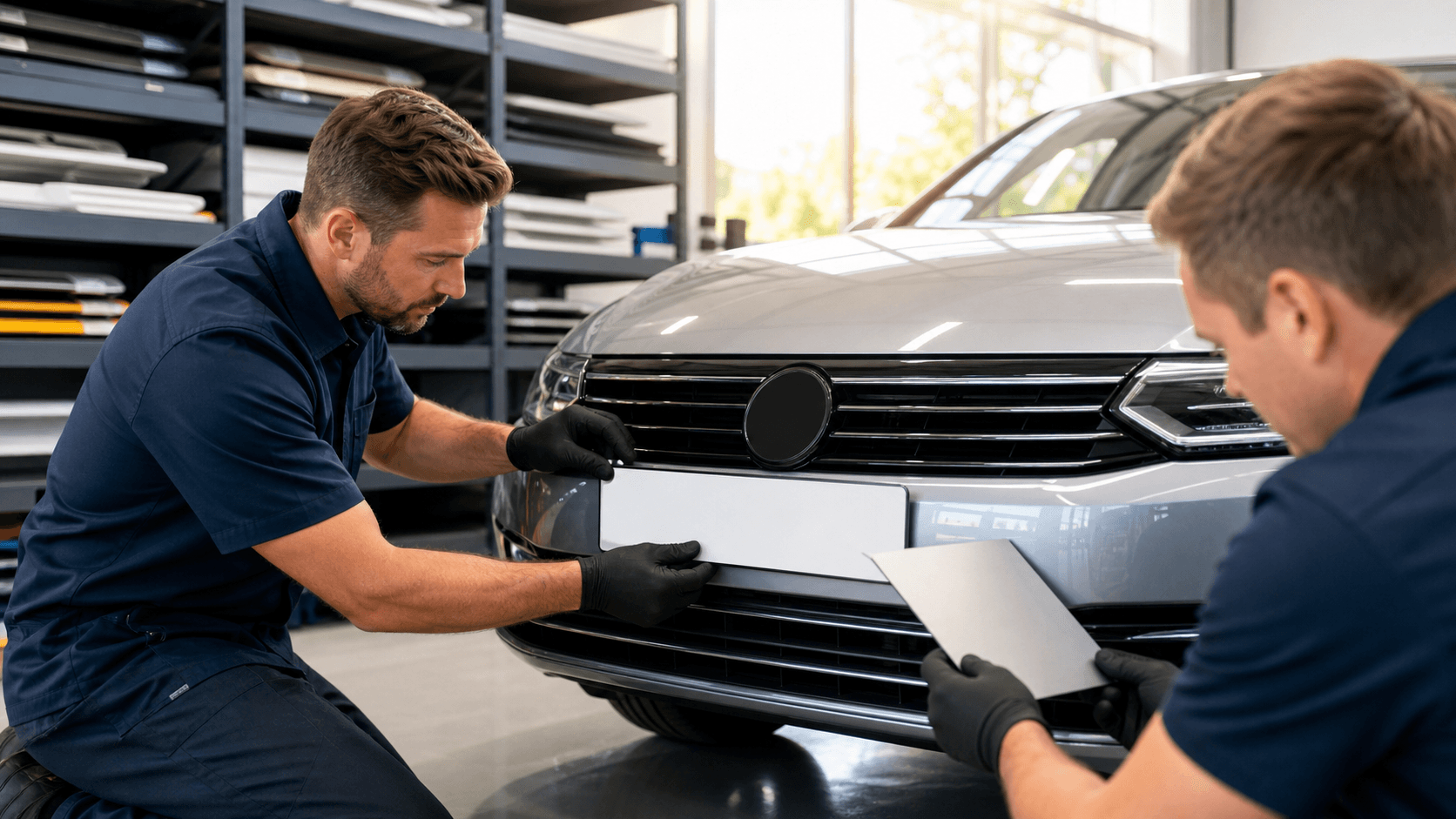
How you fix a number plate is not just a styling choice; it affects legality, safety, and how secure your registration is. A loose or badly fitted plate can earn you a pull from the police, fail an MOT, or even go missing on a rough road. On the other hand, a neat, well-thought-out mounting solution can protect your paintwork, make plate changes easier, and keep everything looking sharp.
As a UK-based specialist in bespoke, road legal and show plates, we spend a lot of time thinking about what happens after the plate leaves our workshop in Bristol. In this article, we compare traditional fixings with modern magnetic mounting systems, look at how each really performs, and help you decide which combination of plate and number plate accessories fits your car, bike or show vehicle best.
How Traditional Number Plate Mounting Really Works
Traditional mounting methods are what most drivers are used to. They are simple, mechanical solutions that physically fasten the plate to the vehicle body or to a holder.
The most common options are:
- Screws through the plate, usually with coloured caps
- Double-sided sticky pads, bonding the plate to the panel
- Bracket systems on motorcycles and some imports
- Factory-fitted plastic holders supplied by the manufacturer
Screws and caps are familiar to MOT testers and the police, and when they are fitted correctly, they hold plates securely at motorway speeds and on poor road surfaces. When combined with decent caps and grommets, they meet UK rules on secure fixing and legible display, and they give testers confidence that the plate will not fall off with the next pothole.
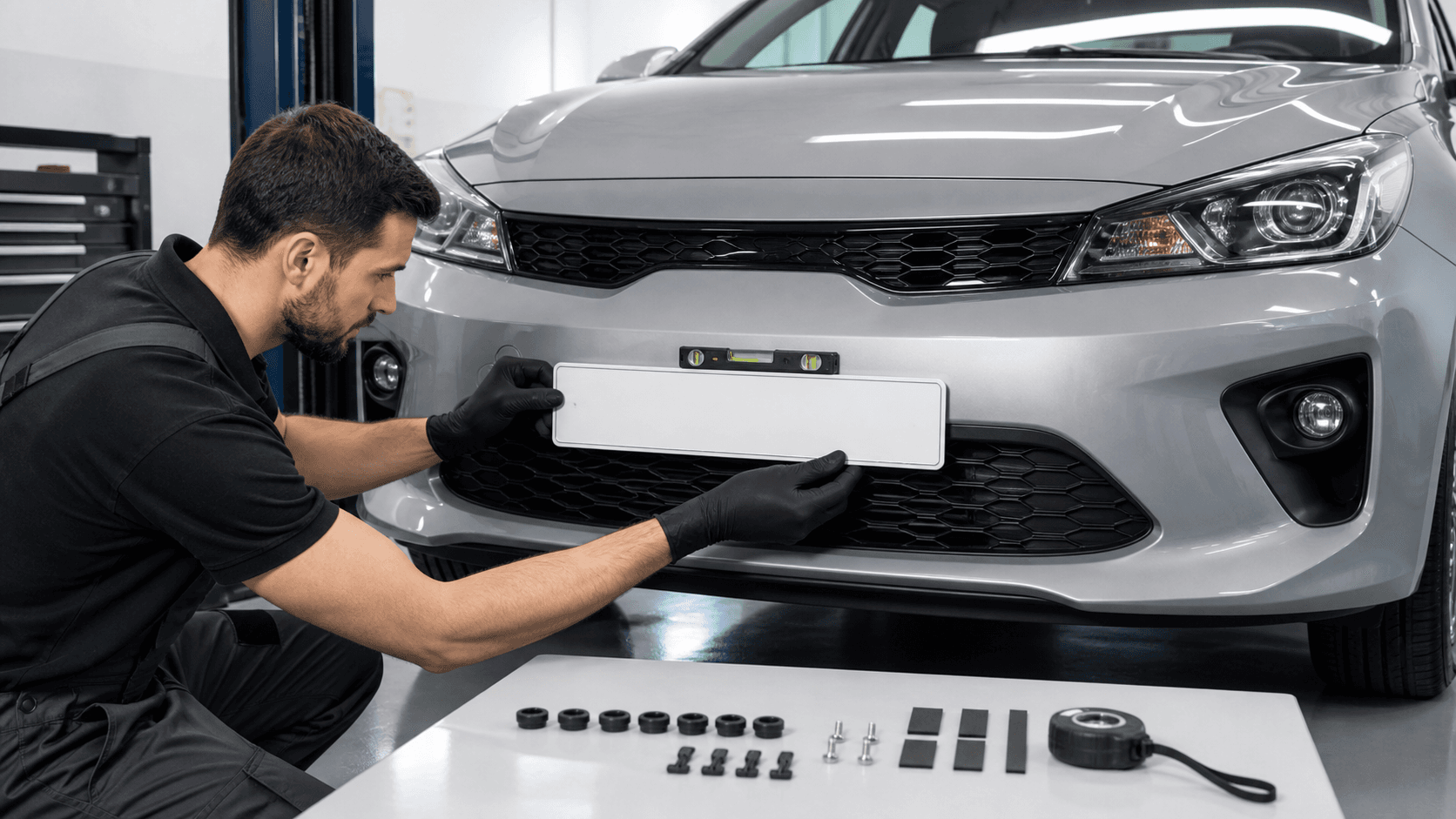
Sticky pads are another long-standing favourite. When used on a clean, flat surface, quality pads give a surprisingly strong bond. They avoid drilling, which is particularly welcome on new bumpers or leased vehicles where you want to minimise permanent marks. Factory holders and frames sit somewhere in the middle, anchoring to the car or bike with screws, while allowing the plate to clip in and out.
Traditional methods do have their downsides. Drilling through a fresh bumper or tailgate can be stressful, especially if the old holes do not line up with a new plate or a different style of registration. Misaligned holes are hard to hide and caps can look messy if they are not carefully positioned. Sticky pads need patience and a very clean surface, and once they have fully cured, removing the plate can be awkward and may pull at the paint. Swapping plates for shows or track days is more of a project than a quick job in the car park.
Inside Magnetic Mounting Systems for Plates
Magnetic systems take a different approach. Instead of physically screwing the plate to the vehicle, they rely on magnetic attraction between components fixed to the car and components fixed to the plate itself.
In practice, most magnetic kits use adhesive-backed steel or metal pads on the vehicle, lined up with strong neodymium magnets fixed behind or within the plate. When you bring the plate into position, the magnets lock onto the pads and hold the plate in place. The key is accurate alignment and careful surface preparation, so the magnets sit flat and the adhesive pads get a proper bond.
Done well, this has several appealing benefits:
- A clean look with no visible screws or caps
- Very quick plate changes for show plates or private registrations
- Less need to drill into bumpers or panels
- Reduced risk of chipping or marking paintwork around fixing points
Magnetic mounting is especially tempting for those who like to alternate between a legal plate and a show plate at events, or who change private registrations more often.
There are, however, real limitations to keep in mind. Magnetic strength is heavily affected by distance and surface contact, so any curve, texture or dirt between the magnet and the metal pad can weaken the hold. Many modern bumpers use plastics and composites with little or no metal behind them, so the magnets rely entirely on the adhesive pads, not the bodywork itself. Lower quality magnets or weak adhesives are more likely to let go during high-speed driving or in harsh weather, so the quality of the components and the care taken with installation are both very important.
Performance Head-to-Head: Road Use, Weather and Security
On the road, the big questions are: will the plate stay put at speed, does it cope with rain and temperature changes, and how vulnerable is it to theft or loss?
Traditional screw fixings are proven for long-term use. When correctly fitted, the mechanical connection between screw, plate and bodywork offers strong resistance to wind pressure at speed, vibration over uneven surfaces and sharp braking. Sticky pads can be just as solid when the surface is properly cleaned and de-greased, and when you use enough pads to spread the load.
Magnetic systems rely on the balance between magnet strength and the forces trying to pull the plate away. A well-designed kit with strong magnets, plenty of contact area and good adhesive on the metal pads can give a firm hold for normal driving. That said, if you regularly drive at higher speeds, carry bikes on a rear rack, or use jet washes up close, you are putting that attachment under extra stress. Any contamination, like road grit or salt, between the contact points can also reduce grip.
Weather is another factor. All systems have to cope with water ingress, road salt and changing temperatures. Screws and brackets can corrode if low-quality metals are used, so decent caps and stainless or coated fixings make a difference. Sticky pads are sensitive to temperature; cheap pads can harden, crack or soften over time. Magnetic pads and magnets need to be sealed properly so water does not creep behind the adhesive.
Security and theft risk are where the differences become clearer:
- Screwed plates: harder to remove quickly, especially with anti-theft or locking caps
- Sticky pads: can be prised off, but it takes effort and often damages the plate
- Magnetic systems: very easy to remove intentionally, which is helpful for shows, but also attractive to an opportunist thief
Using better quality number plate accessories helps. Locking or tamper-resistant caps make traditional mountings less appealing to thieves. With magnetic systems, the trade-off between convenience and security is sharper, so it is worth thinking honestly about where you park and how often the car is left unattended.
Legal and Practical Considerations for UK Drivers
UK regulations require number plates to be clearly visible, correctly positioned and securely fixed. There is no long list of approved fixing methods, but the phrase "securely attached" matters. If a plate is hanging off, flapping, or can be removed with a light pull, that is likely to be viewed as non-compliant.
For MOT purposes, testers will look for a plate that is firmly attached and readable from the specified distances and angles. Traditional screw mountings and pads, when sound, make this straightforward. Magnetic setups are more of a grey area, because the tester may not be able to see how the plate is held on. If the plate feels loose or moves noticeably when touched, that will count against it.
From an insurance point of view, driving without a plate, or with a plate that has fallen off, can cause problems if there is a claim or you are stopped by the police. A missing plate can also create headaches if someone finds it and uses it on another vehicle. For this reason, we would always suggest treating road use differently from show and display use.
Magnetic mounting fits best where the risk is lower:
- Show plates on private land
- Photoshoots and display use
- Short-term or temporary fitting
For daily commuting, motorway driving, long trips or motorcycles, traditional fixings still tend to be the safest and most predictable choice.
Choosing the Right Mounting and Accessories for Your Plate
The best setup depends on how you use your vehicle. A daily commuter car that lives in public car parks has very different needs to a garaged show car or a bike that only comes out on sunny weekends.
As a simple guide:
- Everyday car or van: high quality screws or pads, with caps or a frame, prioritising security and MOT-friendliness
- Show car or classic: a combination of traditional fixings for road use and magnetic or quick-change solutions for events
- Motorcycle: sturdy brackets and fixings that can handle vibration and weather exposure
- Leased or nearly new vehicle: pads or frames that minimise drilling and permanent marks
- Frequently swapped private plates: traditional mountings, but planned hole positions and frames that make plate changes tidier
Number plate accessories can fine-tune whichever method you choose. Good sticky pads, proper screw kits with caps, tidy frames and specific show plate mounts all make fitting neater and more reliable. From our workshop in Bristol, we see how much difference these small details make to the finished look and to how plates cope over time.
Whichever route you take, the priorities stay the same: keep the plate secure, keep it legal, and choose a mounting system that suits how you actually use your car or bike, not just how it looks on the driveway.
Upgrade Your Plates With Reliable Accessories Today
Choose South West Number Plates for durable, road-legal enhancements that keep your vehicle looking sharp and compliant. Explore our high quality number plate accessories to find the ideal fit for your car or van. If you would like tailored advice before ordering, simply contact us and we will help you choose the right options.