Faster, Cleaner Installs for Your Number Plates
Swapping number plates should feel simple, not stressful. When the weather warms up and you want fresh plates on for summer drives or shows, the last thing you need is snapped screws, rusty fixings and a plate that sits wonky on your bumper.
Number plate sticky pads give a much easier way to fit plates at home. No drills, no cracked acrylic, no stress. They are especially handy if you are upgrading to 3D or 4D plates and want a neat finish that suits the look of your car or bike. Used properly, they hold firmly and protect both the plate and the bodywork.
At South West Number Plates, we make bespoke road-legal and show plates for cars and motorcycles, including 3D and 4D styles. From our point of view, the way your plate is mounted matters just as much as the design. Here we will go through what number plate sticky pads are, when to use them, how to fit them correctly, and the common mistakes to avoid.
Why Number Plate Sticky Pads Beat Traditional Screws
Old screw and bolt kits can cause all kinds of trouble. You often need to drill through the plate or bumper, then you risk cracks, chips and rust around the holes. On top of that, the fixings stay on show and can spoil the look of a clean modern plate.
Sticky pads change that. They give you a simple, tool-free way to mount plates that is ideal for home installers and enthusiasts. Some key advantages are:
- No drilling into the plate or bumper
- No cracked acrylic around screw holes
- No rusty screws or metal caps on display
- No need to reach behind trim or bumper covers
Because the plate is held flat against the surface, there is less chance of vibration and rattling at higher speeds. It is also easier to remove and replace a plate when you want to upgrade your design or refresh your look.
From a style point of view, sticky pads keep everything neat. For 3D gel and 4D acrylic plates, the letters are already the star of the show. Clean edges and no visible screws mean the design can stand out on its own, which is especially nice on personalised and show plates.
As far as legality goes, sticky pads do not change the rules. What matters is that the plate itself is road-legal and correctly placed and that it is fixed securely. Used in the right number and on the right surface, quality pads will hold standard UK plate sizes for both cars and motorcycles.
Choosing the Right Sticky Pads for UK Weather
Not all sticky pads are equal. Cheap, thin pads made for light craft jobs can peel away when faced with real road use, rain and jet washes. For number plates, you want pads made for automotive use.
Good number plate sticky pads should have:
- Strong automotive-grade adhesive
- Good grip in wet and dry conditions
- Resistance to road salt and grime
- Enough thickness to cope with slight curves
Here in the UK, plates get hit with frequent rain, damp mornings and road salt in colder months, then warmer afternoons and hot panels in the sun. That constant change in temperature and moisture can cause low-quality pads to go soft, brittle or lose grip at the corners.
3D gel and 4D acrylic plates also have a bit more weight and depth than flat plates, so they benefit from higher-bond pads that spread the load. The same applies to many motorcycle plates, which are often mounted lower, closer to road spray and vibration.
If you are getting ready for summer road trips, car meets or show season, it makes sense to pick pads that are ready for that use. Strong pads help your plates stay put through long drives, warm car parks and regular cleaning, including careful use of pressure washers once the adhesive has fully cured.
Step-by-Step Guide to Fitting Plates with Sticky Pads
A smooth install is mostly about preparation. Sticky pads are only as good as the surface you give them.
- Preparation
Start by cleaning the mounting area on the car or bike and the back of the plate. Remove any old pads, foam, glue or screw covers. Then:
- Wash with a mild cleaner to remove dirt and road film
- Wipe away polish, wax and silicone residues
- Dry fully with a clean, lint-free cloth
The surface must be clean, dry and smooth. Even a thin layer of wax can stop adhesive from bonding properly.
- Placement
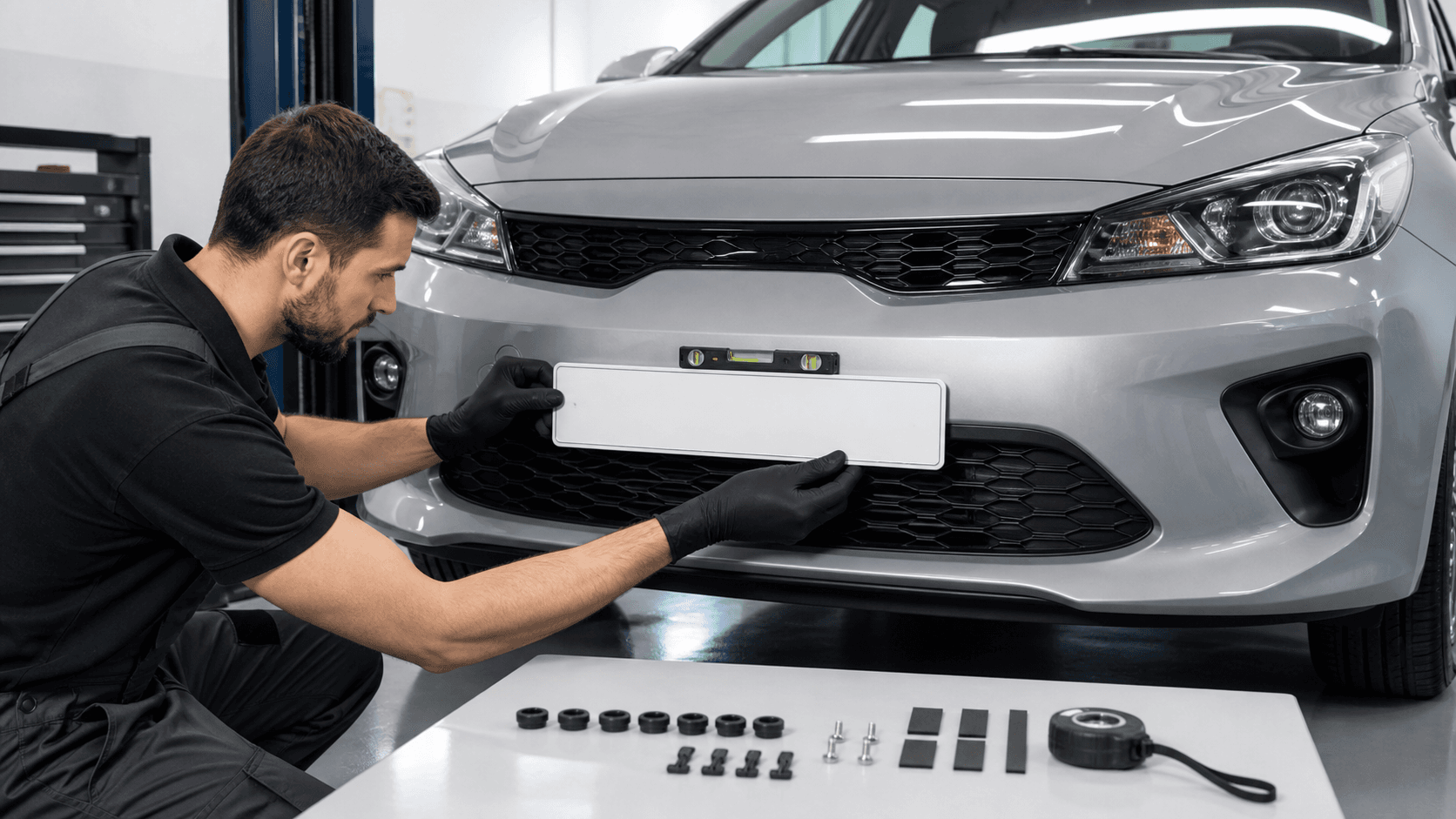
Before you peel any backing off, hold the plate up and test-fit it. Check that it is straight and correctly centred, and that nothing will block it.
Handy tricks for alignment include:
- Using small bits of masking tape as guides along the bumper edge
- Making light pencil marks where the corners should sit
- Stepping back a few paces to double-check the view
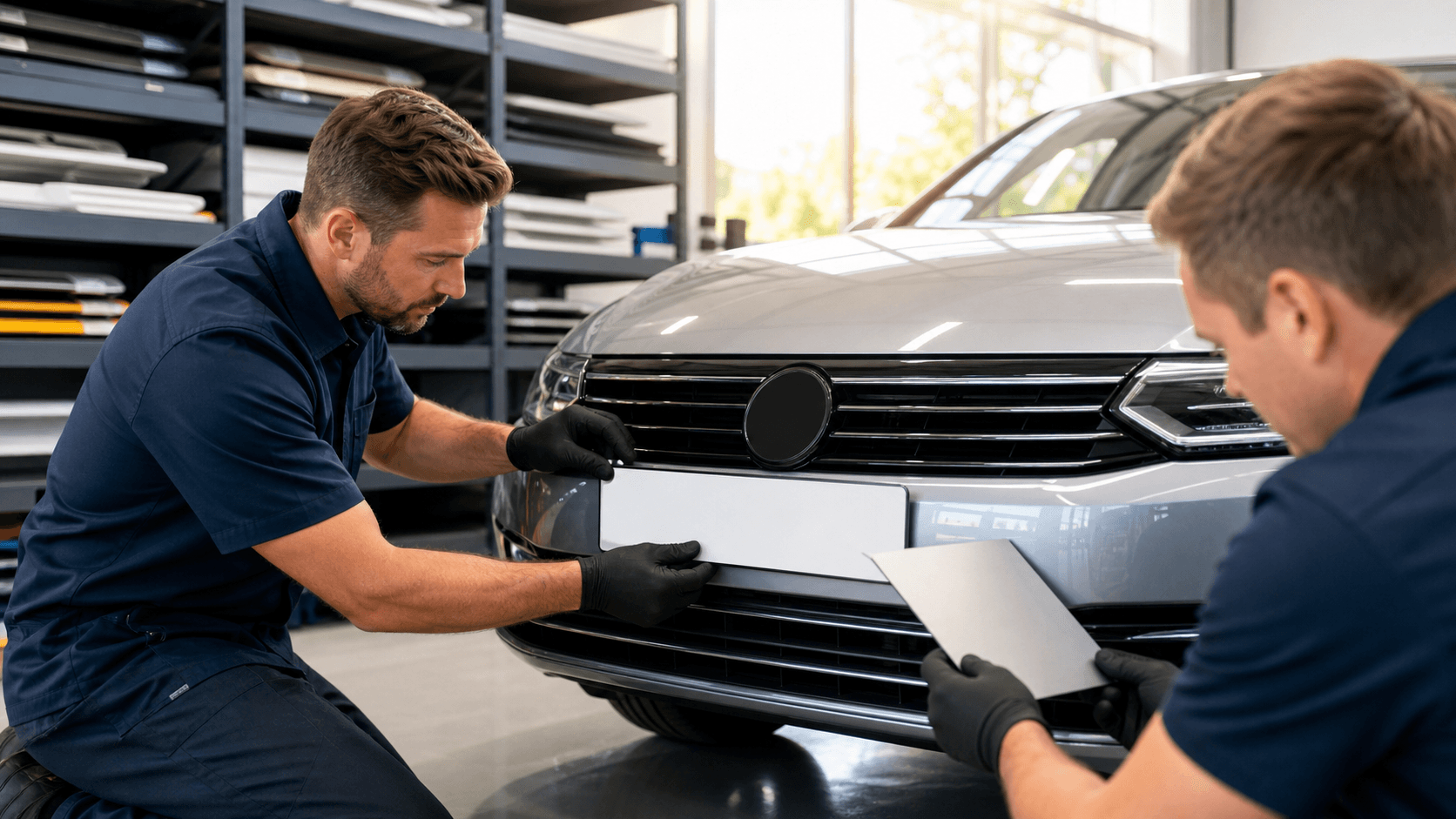
When placing sticky pads on the back of the plate, space them evenly. For a full-size car plate, use multiple pads across the length, not just one or two in the middle. You want support at the corners and along the centre, so the plate sits flat and does not flex.
- Application
Stick the pads to the back of the plate first and press them down firmly. Once they are in place, peel off the backing strips to expose the adhesive.
Line the plate up using your guides, then press it onto the vehicle in one smooth movement. Once it touches, avoid sliding it around, as this can weaken the bond. Press the whole plate firmly with both hands for around 30 to 60 seconds, covering all the pad locations.
- Curing and Checks
Adhesive grip improves over time as it cures. Try to:
- Avoid pressure washing or roller car washes for at least a day
- Be gentle when cleaning around the plate in the first 24 hours
- Give the edges a quick press-check over the first week
A quick glance when you wash the car is often enough to spot any early lifting before it turns into a bigger issue.
Avoiding Common Mistakes with Number Plate Sticky Pads
Most sticky pad problems come down to a few simple missteps. Common issues include:
- Sticking pads to damp, dusty or waxed surfaces
- Using too few pads to hold a full-size plate
- Mixing old, part-used pads with new ones
- Fitting in very cold conditions where adhesive struggles to grab
Cold panels and damp air can reduce initial grip. If possible, fit plates in mild, dry weather or in a sheltered space and make sure surfaces are warmed slightly, but not hot.
There are also legal and practical points to think about. Plates must not be too low, too high, tilted back at a strong angle or blocked by trim, holders or accessories. Rushing a sticky pad install can leave a plate only half-bonded, and a loose plate on the road is not something anyone wants.
If a corner starts to lift, do not just shove more pads or glue behind it. Gently warm the area if needed, carefully remove the plate without twisting it too hard against the paint, clean off the old adhesive from both surfaces and start again with fresh pads. If the bumper is very curved or the mounting area is unusual, screws or extra supports might still be the better choice, and a specialist can advise on the safest method for that setup.
Upgrade Your Plates and Fitting for Summer Drives
Fresh plates and the right number plate sticky pads make a big difference when the sun is out and the roads are dry. A clean, screw-free finish suits modern cars and bikes, and it helps show off 3D and 4D designs when you pull into a meet or wash the car on a weekend.
At South West Number Plates, we focus on premium, road-legal and show plates made in-house, and we know how much care goes into choosing the right look. With good sticky pads, simple preparation and a bit of patience, you can achieve a tidy, professional-style fit at home that protects your bumper and your plate.
Secure Your Plates With Discreet, Reliable Fixings
Make fitting your plates quick, clean and secure with our high‑quality number plate sticky pads designed to hold firm in all weather conditions. At South West Number Plates we'll help you choose the right fixing option so your plates sit neatly without drilling into your vehicle. If you have any questions about suitability or installation, simply contact us and our team will guide you through the best solution for your car.