Build a Track-Day Plate Setup You Can Swap in Minutes
Running proper track days in summer is great fun, right up until you are on your back in the paddock, fighting with screws, or worrying if the plate is going to snap halfway down the straight. Many drivers end up juggling a legal plate for the road and a nicer custom plate for photos, and it quickly becomes a headache.
This guide walks through how to build a track-day plate setup you can swap in under a minute, with no tools and no stress. We will look at the rules for road sections, quick-swap mounts that stay put at speed, plate styles that suit fast driving, and simple ways to protect your plates from stone chips and offs.
When we say track-day plate setup, we mean three things working together: a smart mounting system, the right mix of legal and custom show plates, and basic protection so everything survives high-speed runs. This matters most for performance cars, hot hatches, and weekend toys that see both motorway miles and circuit time in the same day.
We work with 3D, 4D, and performance number plates that are made to cope with strong airflow and repeated plate changes, so we see these problems all the time at our Bristol base and from drivers across the UK.
Know the Rules: Legal Plates for Road Sections
Before thinking about quick swaps, the boring bit matters: staying legal on the way to and from the circuit. That means your on-road plates need to match the main DVLA rules.
Key points drivers usually need to remember are:
- White plate at the front, yellow at the rear
- Black characters only, in the standard UK font
- Correct character size and spacing
- Reflective background, no reflective letters
- Proper markings showing the plate meets the British Standard
Those markings are not just for show. If you are pulled on the way to the track, the officer is likely to check that the plate style and spacing are correct and that it has the right approval marks.
This is where the difference between legal plates and custom show plates comes in. Custom plates can play with things like:
- Tightened or shifted spacing
- Extra badges or logos
- Tints or smoked finishes
- Fun wording instead of full registration
That kind of plate is for off-road only, like private circuits, static shows, or paddock photos. It is not for public roads, even if it looks tidy.
For dual-use, the smart setup is:
- A fully road-legal plate as your default, always used for public roads
- A clearly different custom show plate that you keep in the car for track runs or photos
Swapping between the two takes seconds once your mount system is sorted, and it keeps you out of trouble on the way home.
Quick-Swap Mounting: Fixings That Work at Speed
If you want fast swaps, the fixing method matters just as much as the plate itself. Each option has trade-offs.
Common mounts include:
- Sticky pads: neat and cheap, but hard to remove cleanly and can lose grip with heat, water, or repeated pulls
- Traditional screws: solid and simple, but slow to swap and leave holes in bumpers and plates
- Bracket systems: fixed brackets on the car, plate then screws or clips to that bracket
- Quick-release frames: higher-grade systems that let you clip plates in and out without tools
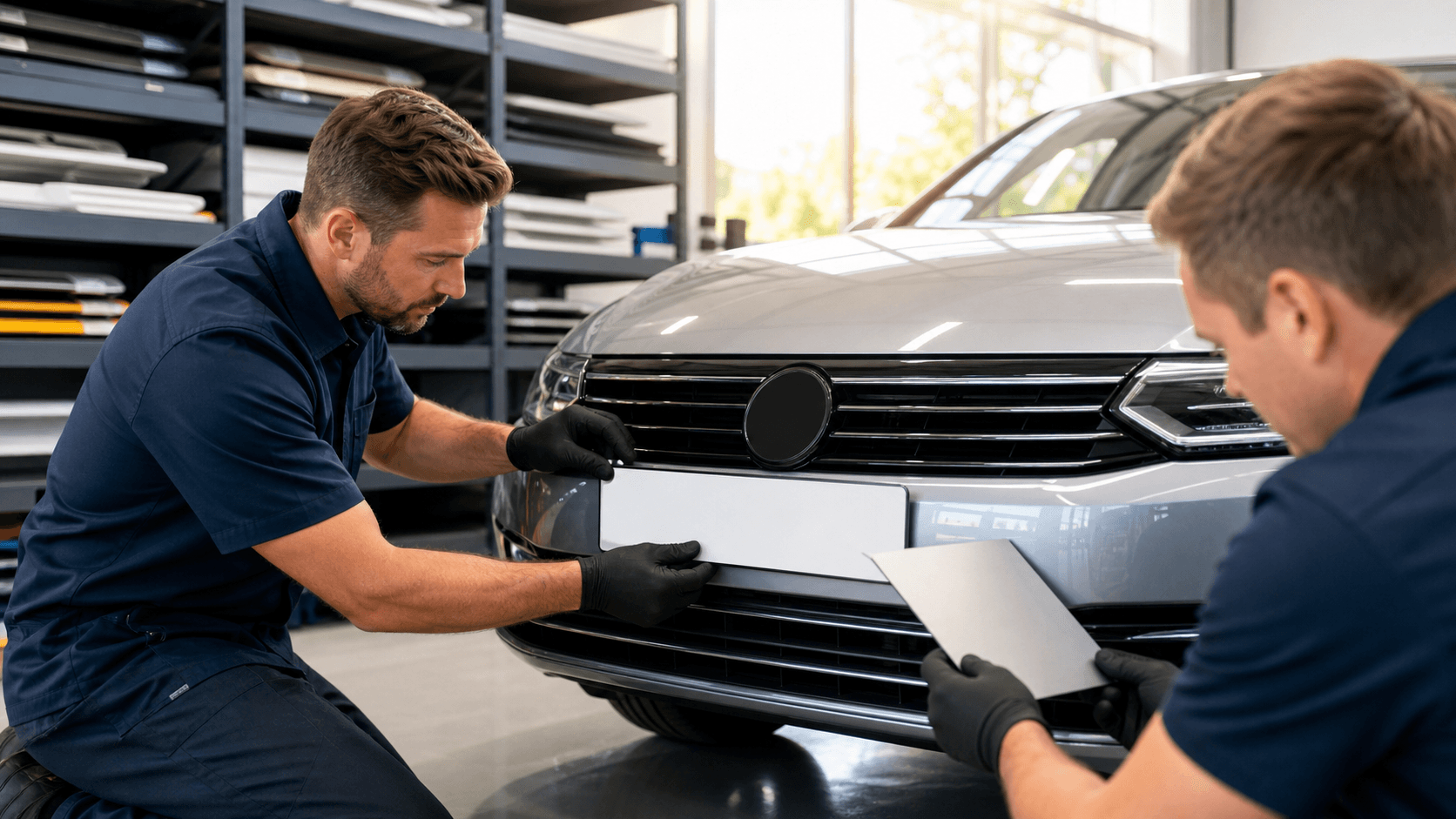
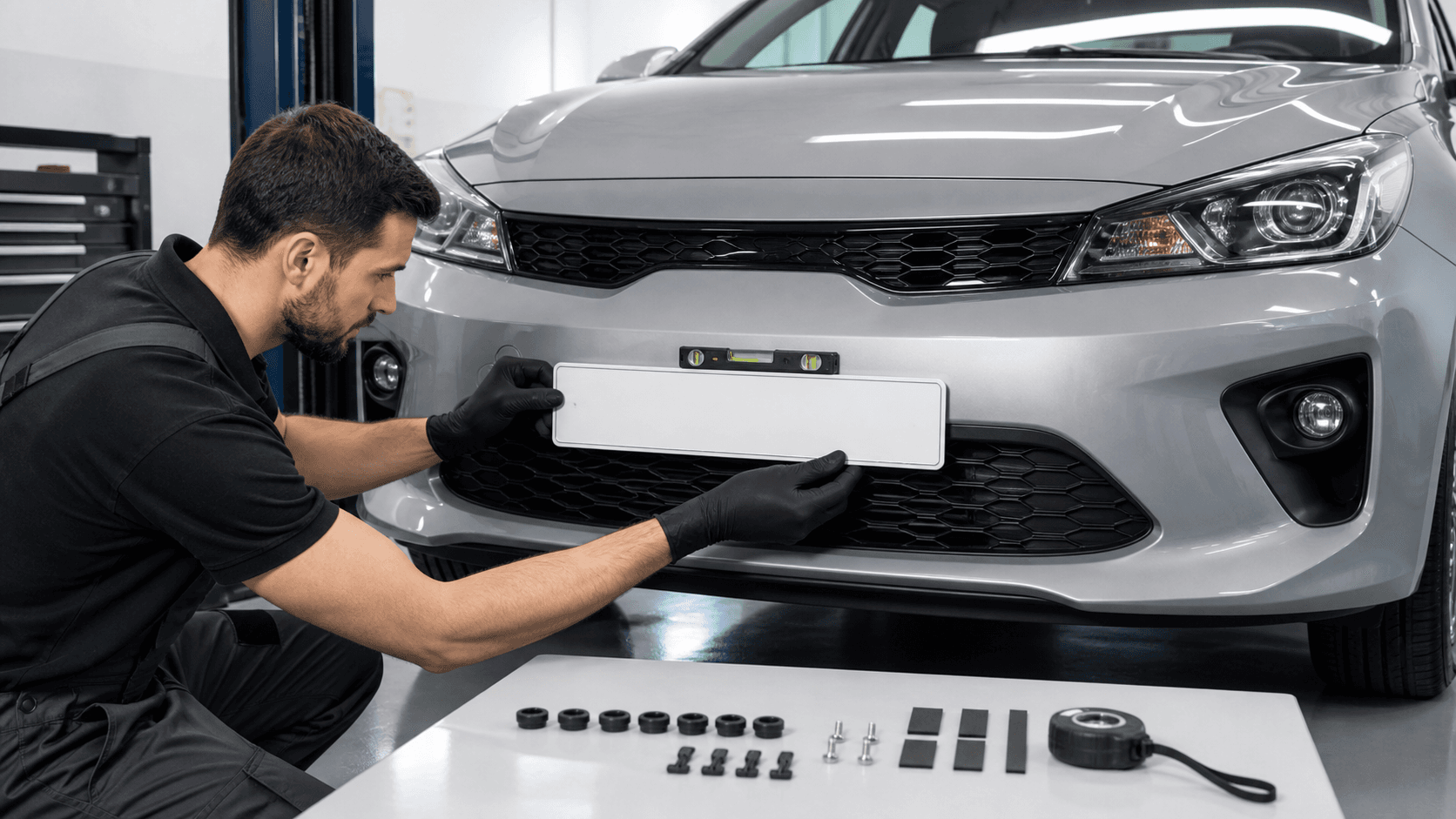
For most track-day setups, a good approach is a backing plate or bracket that is bolted firmly to the car, then a removable plate fixed to that. The car only has one set of permanent holes, and you swap between legal and show plates on the bracket instead of the bumper.
A popular combo is:
- Bracket or backing plate screwed securely to the bumper
- High-strength hook-and-loop or a quick-release frame holding the plate to the bracket
Done properly, this can handle motorway and track speeds while still letting you change plates on the grid.
Placement matters too. On many performance cars the front plate can block airflow to the radiator or intercooler. Some owners try:
- Standard central position
- Offset mounts to one side
- Slight changes in height to clear grills and intakes
A removable system makes it easier to test different positions without covering your bumper in drill holes.
Choosing the Right Plate Style for Track and Show
Once the mount is sorted, the next choice is what type of plate to run. The main styles we see for track-day builds are 3D gel, 4D acrylic, and slim performance plates.
Here is how they compare in practice:
- 3D gel: raised, glossy characters, flexible top layer that can resist small chips and keeps a deep shine
- 4D acrylic: sharp, laser-cut characters with a more blocky look and a very clean edge
- Performance plates: usually slimmer, with a focus on low weight and a tighter, motorsport feel
At speed, a stiffer plate is less likely to flap, crack, or craze. Good quality materials also help the characters stay crisp instead of fading or lifting.
There is also a safety angle. When you are driving home after a long summer evening at the circuit, clear reflective plates and sharp characters make the car easier to see and identify in low light or rain. A well-made legal plate can still look smart for photos in the paddock, especially with 3D or 4D styles.
If you enjoy shows or club events, a second set of custom show plates can be great fun. Typical ideas include:
- Track name or layout themes
- Race number style fonts or layouts for off-road use
- Discreet logo accents to match the car build
Run your legal plate on the road and swap to the custom set only when you are safely off the public highway.
Protecting Your Plates From Stone Chips and Offs
Track work is hard on number plates. Fast cars kick up rubber and tiny stones, and many circuits have gravel traps and kerbs waiting for a slight mistake. Cheap plates can quickly:
- Chip and craze on the front surface
- Delaminate, where layers start to peel
- Crack across the middle from flexing
There are a few simple add-ons that help plates survive longer on track:
- Clear protective film on the face of the plate
- Slightly thicker acrylic to resist flex
- Sacrificial backing plates that take the worst of the impacts
The trick is to keep the plate strong without making it look bulky.
Between sessions it is worth giving your plates a quick check. A simple routine might be:
- Check all fixings and mounts by hand for movement
- Wipe off rubber marks, bugs, and dust with a soft cloth
- Look closely for early cracks, chips, or warping
- Make sure quick-release systems still clip firmly with no rattles
Catching a problem early is much better than losing a plate mid-session or halfway home.
Plan Your Track-Day Plate Kit and Get Ready to Go
If you treat your plates like part of your track kit, the whole day runs smoother. Keeping everything together makes it easy to switch setups in the paddock without hunting for tools.
A simple kit could include:
- Front and rear road-legal plates
- A pair of custom show plates for track and events
- Spare sticky pads or hook-and-loop strips
- A small pack of spare screws or clips
- A soft cloth and a protective sleeve or pouch for plates not in use
Many drivers start planning this as the weather improves and track calendars begin to fill. Getting your plate setup sorted before the busy summer months means you can say yes to last-minute bookings without worrying about fixings, legality, or whether the plate will survive another flat-out straight.
We focus on making 3D, 4D, and performance plates that suit this kind of use, from standard legal sets through to custom show plates for track days and events. With a little planning around mounts, plate styles, and protection, you can enjoy your next track day knowing your plates will stay legal on the road, look sharp in the paddock, and cope with the speeds you built the car for.
Transform Your Vehicle With Premium Custom Show Plates Today
Upgrade your car's look with South West Number Plates and enjoy high-quality, road-ready style tailored to your taste. Explore our range of custom show plates and choose a finish that truly reflects your personality. If you have any questions or need a hand with your order, simply contact us and we will be happy to help.